There comes a point in a dog's life when the full groom she handled easily becomes a long day. She sits down in the tub. She leans against the groomer during drying. She comes home and sleeps through dinner. Those are not behavior problems. They are a senior dog reporting that the appointment needs to change shape: shorter, gentler, and closer to home base in Clover, so the outing itself stays small and familiar.
Soapy Paws does baths, blow-dries, haircuts, and nail trims. This how-to lays out how a senior groom should be planned, what you can do at home between visits, and where grooming hands off to veterinary care.
Why old dogs need a different appointment
Arthritis leads the list. Stiff hips, elbows, and shoulders make standing on a table or in a tub genuinely hard work, and slippery surfaces multiply the effort. Skin thins with age, bruises and nicks more easily, and sprouts lumps and tags a groomer must be told about in advance. Drying takes longer on many old coats, and temperature control weakens, so a senior can get chilled in the bath or too warm under a dryer that would not trouble a younger dog.
Hearing and vision loss change the social side of grooming too. A dog who cannot hear the groomer coming startles at a touch that would have been announced a moment earlier by sound. Calm handling, a hand shown before it is used, and a familiar salon where staff already know the dog all compensate for senses that are fading.
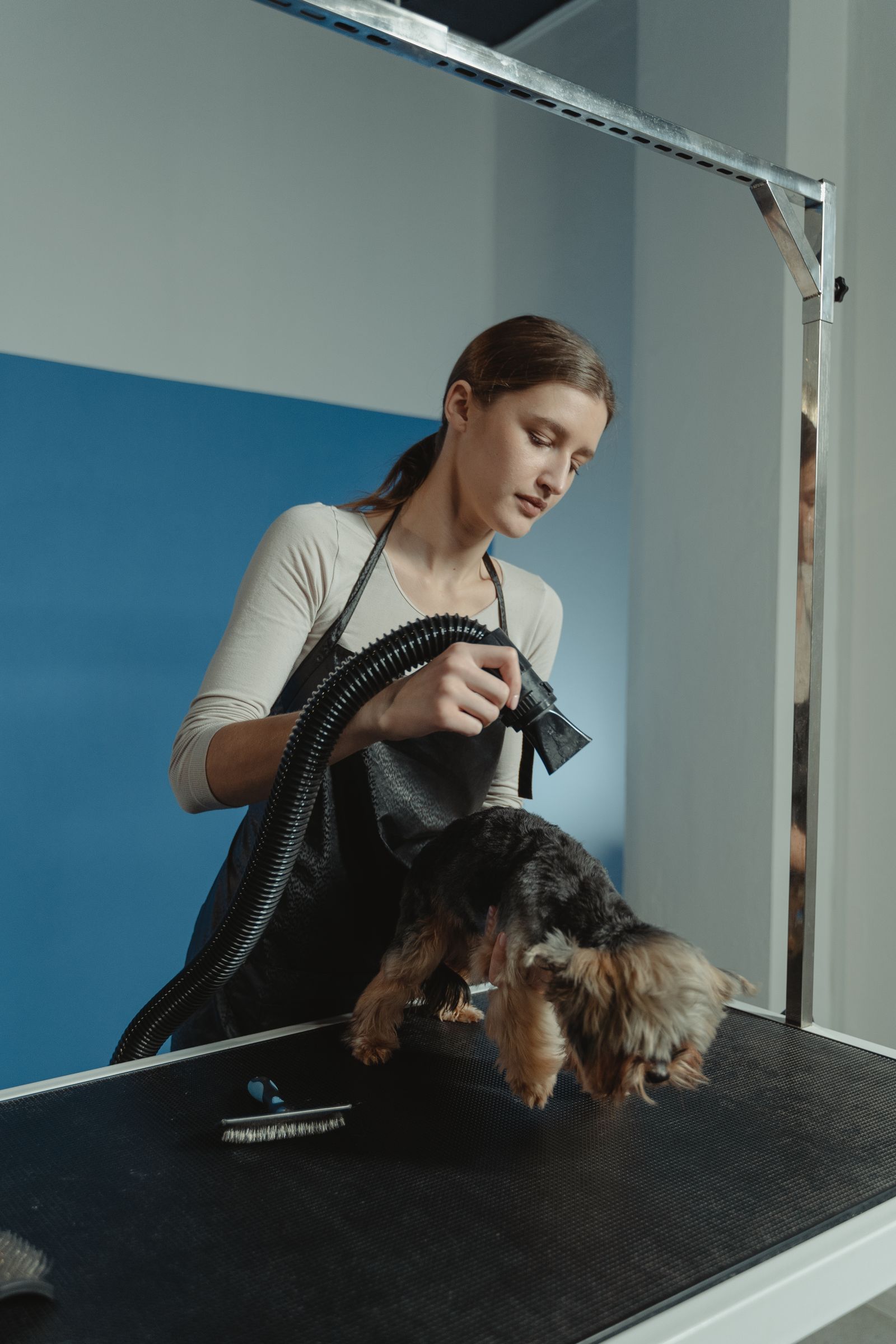
The senior groom, step by step
- Start with a realistic time budget. Decide in advance how long your dog can comfortably stand and be handled, and tell the groomer. A plan built around that limit protects the dog better than any product.
- Hand over a health brief at check-in. Arthritis locations, cardiac or breathing issues, medications, seizure history, new lumps, and places the dog guards. Update it every visit; seniors change month to month.
- Request the comfort setup. Non-slip matting in the tub and on the table, warm water, a low entry or lift rather than a jump or high hoist, and breaks where the dog can sit or lie down between stages.
- Pick a clip that serves the dog. One even, practical length that dries quickly and does not mat is the senior standard. It shortens drying and brushing at home and gives up nothing the dog cares about.
- Split the work if the day runs long. Bath and brush one visit, cut and nails the next. For a dog near her limit, two half-grooms are kinder and safer than one full production, and a nearby salon makes the extra trip trivial.
- Keep nails on their own rhythm. Senior nails grow into arthritic toes quickly, and short nails improve footing on every surface. Quick nail trims between grooms are worth scheduling on their own.
- Review the result that evening. Eating normally and resting well is a pass. Soreness, unusual stiffness the next day, or skipped meals means the next appointment gets shorter, warmer, or split.
Your share of the work at home
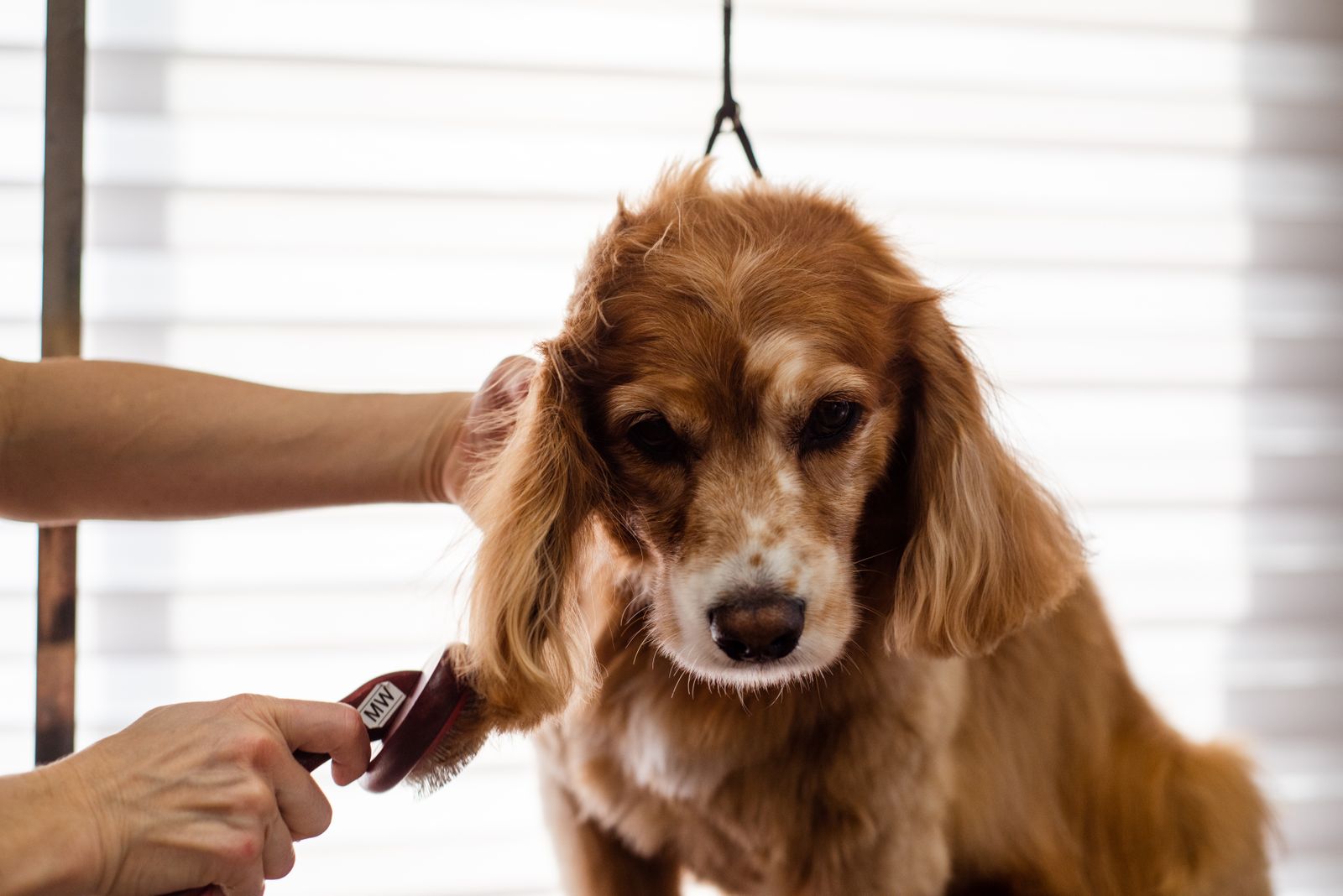
The owners who help seniors most do small things often. Brush for a few minutes with the dog lying on her bed, covering the mat-prone zones behind the ears, under the collar, and in the armpits, so no appointment ever has to include a long dematting session. Check feet weekly and keep the hair between the pads tidy if you are confident with small scissors, since slick fur on hardwood is a fall risk for weak hindquarters.
Weigh the dog monthly, at home or at the vet, and run your hands over her ribs during brushing. Under a full coat, weight loss hides for months. Finding it early, along with new lumps, worsening stiffness, or a dog who suddenly resists a handling she used to accept, is exactly the kind of catch that home grooming time is for. Report changes to both the groomer and the veterinarian; each sees a different slice of the dog.
Where grooming ends and vet care begins
A groomer can adjust pace, position, and style. A groomer cannot treat pain, infected skin, ear disease, or the heart and breathing conditions that sometimes make a standard groom unsafe. Dogs who pant excessively and cannot settle, who cry out or snap when a joint is moved, who have open sores or a strong odor from skin or ears, need a veterinarian in the plan. Some seniors finish their lives being groomed at a clinic with sedation available, and that is a sensible, kind endpoint rather than a defeat.
The rule for Clover owners is simple to state: comfort decides. If a shorter, simpler, split groom keeps your dog clean and content, it is the right groom, whatever she wore in her showier years. Dogs do not miss the fancy cut. They notice whether the day hurt.
Familiar place, familiar people
Regular appointments at one nearby salon give a senior something no technique can: staff who know her baseline. They notice the new limp, the thinner coat, the ear that was fine last month. For a dog whose world is narrowing to home, yard, and a few known destinations, that continuity is care in itself, and it is the practical reason shorter, gentler, and closer to home belong in the same sentence.
Common questions
How short should I keep my senior dog's coat?
Short enough to dry fast and stay mat-free with light home brushing, while leaving cover over thin skin. A consistent comfort length, repeated each visit, works well for most seniors.
Is it better to groom less often as my dog ages?
Usually the opposite. More frequent, shorter visits keep each session easy and catch health changes early. Long gaps lead to mats, overgrown nails, and marathon appointments an old dog cannot spare.
What if my dog can no longer stand for drying?
Ask about drying in stages with rest breaks, lower heat, and the dog allowed to sit or lie down. If she still cannot manage, discuss clinic-based grooming with your veterinarian.
Photos in this guide are representative stock images.
← All guides from Soapy Paws← Back to Soapy Paws