Between full grooms, a dog's coat does not grow evenly in importance. The body can look fine for weeks while the hair around the eyes starts to veil vision, the fur between the paw pads collects ice, mud, and burrs, and the coat under the tail gets untidy in ways that matter for hygiene. That gap is what a mini-groom, often called a face, feet, and sanitary trim, or FFT, is built to fill. For Clover owners, knowing what the tidy covers, and who benefits most, makes scheduling simpler and full grooms last longer.
Soapy Paws offers baths, haircuts, and nail trims. A between-groom tidy is the smaller appointment in that lineup, and for the right dogs it is the one that keeps them comfortable all month rather than just on groom day.
What each part of the tidy actually does
The face trim clears hair from around the eyes and off the bridge of the nose, tidies the beard and mustache area on breeds that grow them, and cleans up stray growth that traps moisture and food. For dogs whose eyes water into facial fur, keeping that area short and clean reduces the damp, stained mat that forms under the eyes and can irritate skin.
Feet work trims the hair on top of the foot to the shape of the style and, more importantly, clears the hair between the pads underneath. Pad hair that grows long picks up mud and road grit in wet Carolina weather, mats into uncomfortable pellets between the toes, and turns smooth floors into skating rinks for older dogs. Sanitary trims shorten the coat around the belly, under the tail, and in the groin area so waste does not catch in the fur, a straightforward hygiene measure that matters most for long, thick, and curly coats.
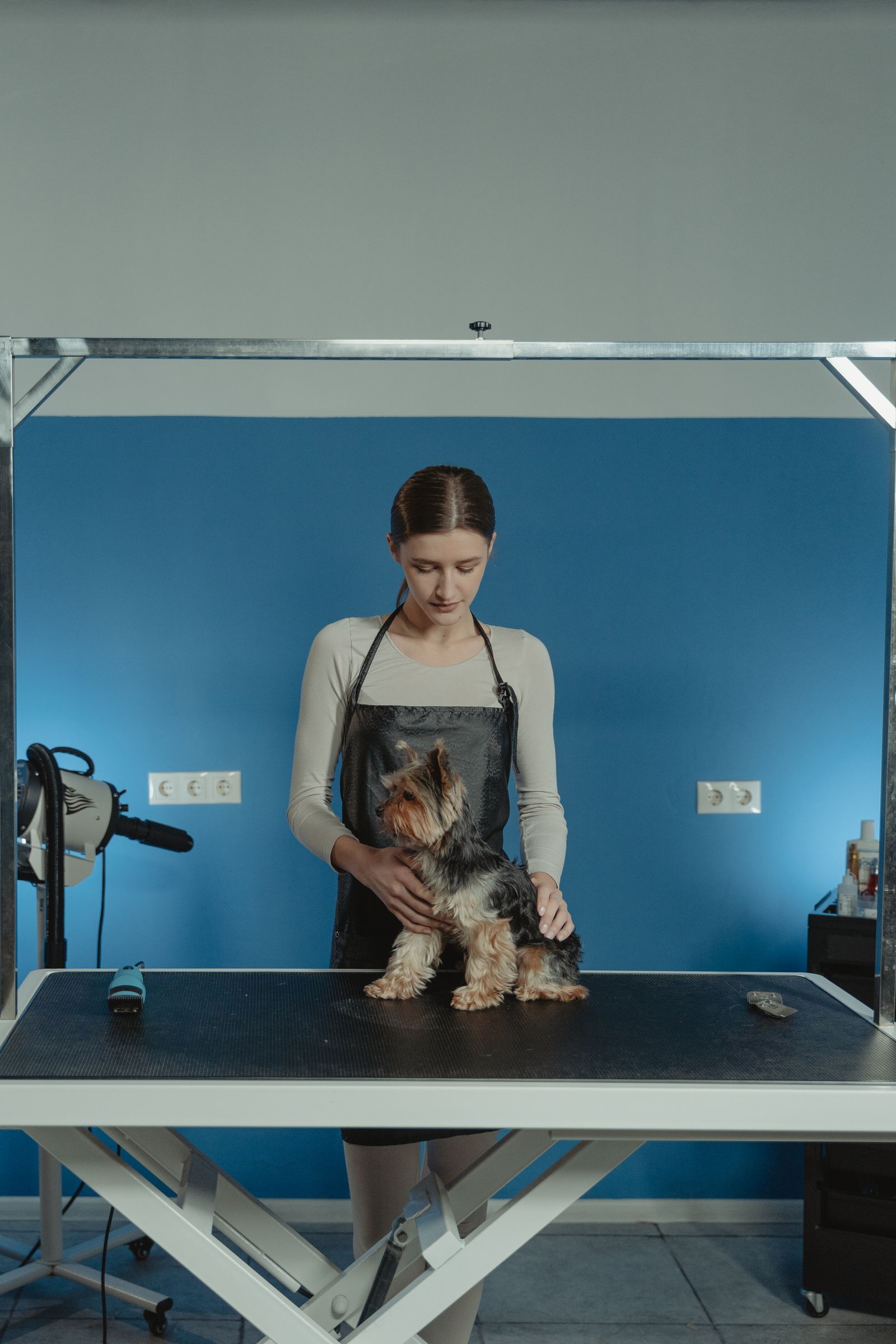
Full groom, tidy, and bath-only, compared
| Appointment | What it covers | Best for | Typical rhythm |
|---|---|---|---|
| Full groom | Bath, blow-dry, full haircut to style, nails, ear check, face, feet, and sanitary included. | Coated dogs on a regular schedule; resets the whole coat. | The anchor appointment, spaced by coat type and growth rate. |
| Face, feet, and sanitary tidy | Trim around eyes and face, feet and pads cleared, sanitary area shortened; often with a quick brush-out; nails sometimes included by request. | Dogs midway between full grooms whose eyes, feet, or hygiene need attention before the body coat does. | Slotted between full grooms to stretch the schedule comfortably. |
| Bath and brush only | Bath, blow-dry, and brush-out with no length taken off; nails and ears often added. | Short-coated dogs, double coats during shedding, and dogs who get dirty faster than they get shaggy. | As needed by dirt, odor, and shedding rather than by style. |
| Nails only | Nail trim, sometimes with pad hair cleared. | Every dog, since nails outgrow any grooming schedule; especially seniors and low-activity dogs. | More often than any other service, commonly every few weeks. |
Who benefits most from the between-groom tidy
Long and curly coats lead the list: poodles, doodles, shih tzus, Yorkies, and spaniels, whose faces veil over and whose pads felt up weeks before the body needs cutting. Puppies benefit in a different way: a puppy's first groom program works best when early visits are short and easy, and tidy appointments let a young dog practice the table, the sounds, and the handling without the length of a full groom. It is training disguised as maintenance.
Senior dogs benefit for comfort reasons. A tidy keeps an old dog's eyes clear, feet steady, and rear clean without asking her to stand through a complete groom as often, and it pairs naturally with split appointments for dogs whose stamina is limited. Dogs recovering from surgery or skin treatment sometimes need the sanitary area kept short and clean while the rest of the coat is left alone, another tidy-shaped job.
What the tidy does not replace
A tidy is maintenance, not rescue. It does not remove established mats, because matted body coat needs the time, tools, and sometimes the clip-down decision of a full appointment, and a responsible groomer will say so rather than tidying around a worsening coat. It also does not include a full style change. Going meaningfully shorter all over, correcting a grown-out cut, or handling a coat that has gone months belongs in a full groom slot, where the time is booked to do it properly.
At home, you can support the tidy rhythm with small habits: wiping faces after meals for bearded breeds, checking between the toes after muddy walks in Clover's red clay, and keeping up with combing in friction zones. Those minutes keep the tidy a tidy, instead of letting small problems accumulate into the next full groom's workload.
Planning a schedule that fits the dog
The tidy works best as part of a planned rhythm rather than a rescue call. Many coated dogs settle into full grooms at regular intervals with one tidy in between, adjusted for how fast the individual dog's face and feet grow and how dirty the season keeps them. Summer, with swimming, mud, and humidity, usually calls the tidy sooner than winter does. Book the pattern with your groomer once, and the coat stays managed in the background of your life, which is where good grooming belongs.
Common questions
Does a face, feet, and sanitary trim include a bath?
It varies by salon, so ask when you book. Some tidies are trim-only, others bundle a bath. The trimming of eyes, pads, and sanitary areas is the defining part either way.
How do I know my dog needs a tidy versus a full groom?
If the body coat is still at a good length and tangle-free but the eyes are veiled, pads are furry, or the rear is untidy, a tidy fits. If the coat has grown out overall or matted, book the full groom.
Can a tidy help my puppy get used to grooming?
Yes. Short, simple tidy visits are an ideal introduction: less standing, fewer procedures, and a positive early experience that makes later full grooms calmer for everyone.
Photos in this guide are representative stock images.
← All guides from Soapy Paws← Back to Soapy Paws