In Clover, the dogs most likely to develop ear trouble are easy to spot: the spaniels with their long, silky ears lying flat, the retrievers who swim in every pond they meet, and the poodles and doodles with hair growing inside the ear canal itself. Their ears share a design flaw. The flap covers the opening, air stops moving, and warmth and moisture build up in a canal that already bends at a sharp angle. Cleaning those ears is a small, regular job. Ignoring them is how a small job becomes a veterinary one.
Soapy Paws offers baths, blow-dries, and coat care, and ears get checked as part of that routine handling. This guide explains the home cleaning that keeps ears healthy and the point where cleaning stops and a vet visit starts.
Anatomy explains almost everything
A dog's ear canal runs down and then turns inward in an L shape before reaching the eardrum. Anything that gets in, wax, water, dirt, loose hair, has a long, bent path back out, and gravity is no help at all. Upright-eared dogs get some airflow over the opening. Floppy-eared dogs get almost none, and the canal stays warm and humid, which is precisely the environment yeast and bacteria prefer.
South Carolina weather adds to it. Humid summers, swimming, baths, and even heavy pollen-season scratching all push moisture and debris into the canal. A Clover dog who swims weekly and has heavy ear flaps is not being neglected when his ears need frequent attention. He is just built and situated for it.
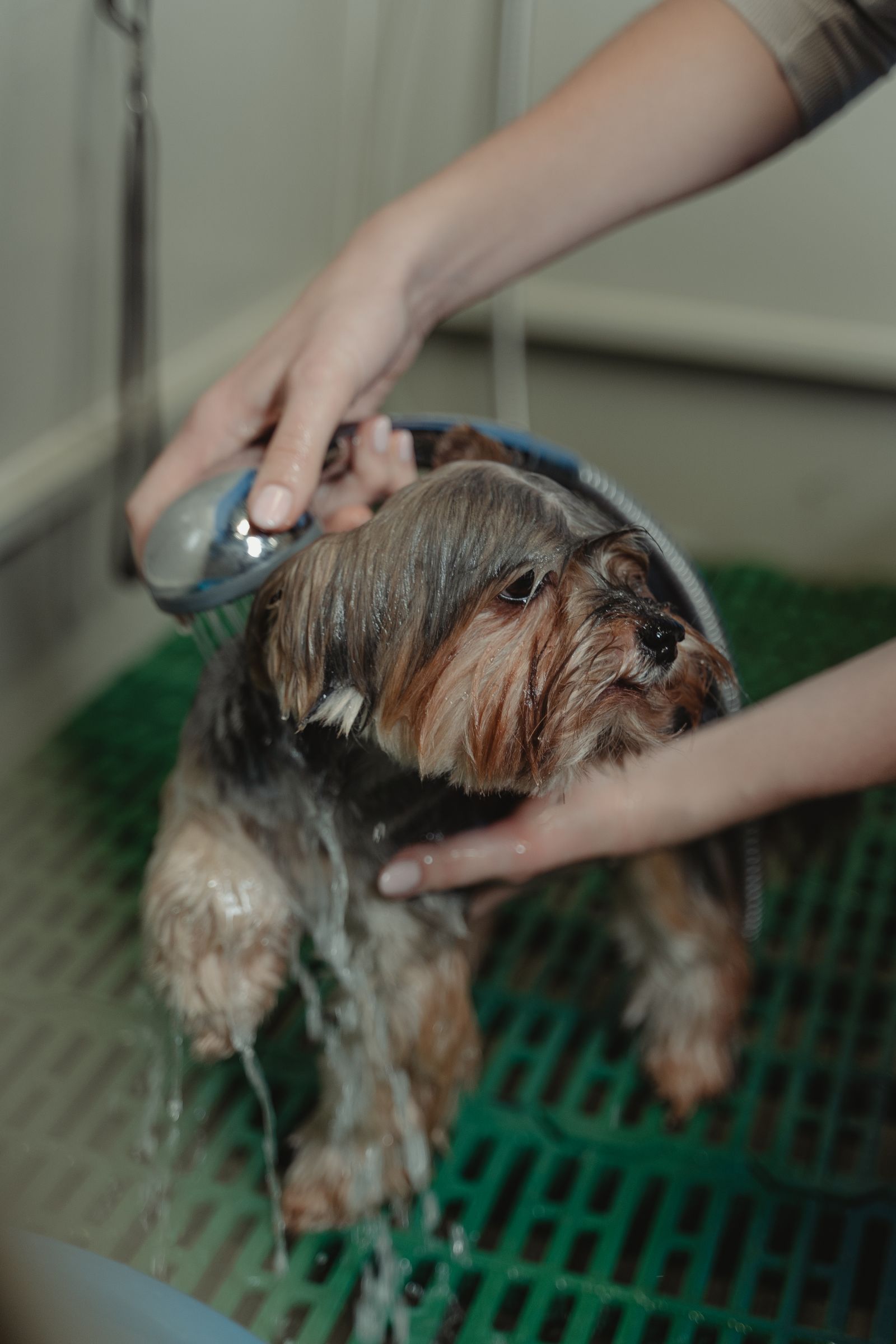
What waiting actually costs the dog
Nobody decides to let an ear get infected. It happens in stages, each one easy to miss. A little wax becomes a lot of wax. Scratchy ears get scratched, driving debris deeper and breaking the skin of the canal. Yeast takes hold, the smell arrives, and the dog starts shaking his head hard enough to risk a blood blister in the ear flap itself. Deep infections can reach the middle ear and affect balance, and chronic ones thicken the canal until cleaning and medication barely reach where they need to go.
Each stage is more painful and harder to treat than the last, and dogs who go through repeated infections often become ear-shy, fighting the handling that future care requires. The practical numbers behind routine care are simple, and they are worth knowing before a problem starts.
The home cleaning routine
You need a dog ear cleaning solution from a vet or pet supplier, cotton balls or gauze pads, and a dog who has been exercised and is calm. Raise the ear flap, fill the canal with solution until you see it rise, and massage the firm base of the ear below the opening. Listen for a squelch. Then stand back and let the dog shake thoroughly; that shake is mechanical, bringing loosened debris up from the bend where your cotton can reach it. Wipe the visible parts of the ear until the cotton comes away clean, and repeat on a heavily dirty ear.
Two firm don'ts. Do not push cotton swabs, tweezers, or anything else down into the canal, where a wrong move can injure the eardrum and will pack debris deeper in any case. And do not improvise solutions: water stays in the canal and adds moisture, while peroxide and rubbing alcohol sting damaged skin and dry the lining. A proper drying ear cleaner exists precisely because the canal's shape makes water-based home remedies backfire.
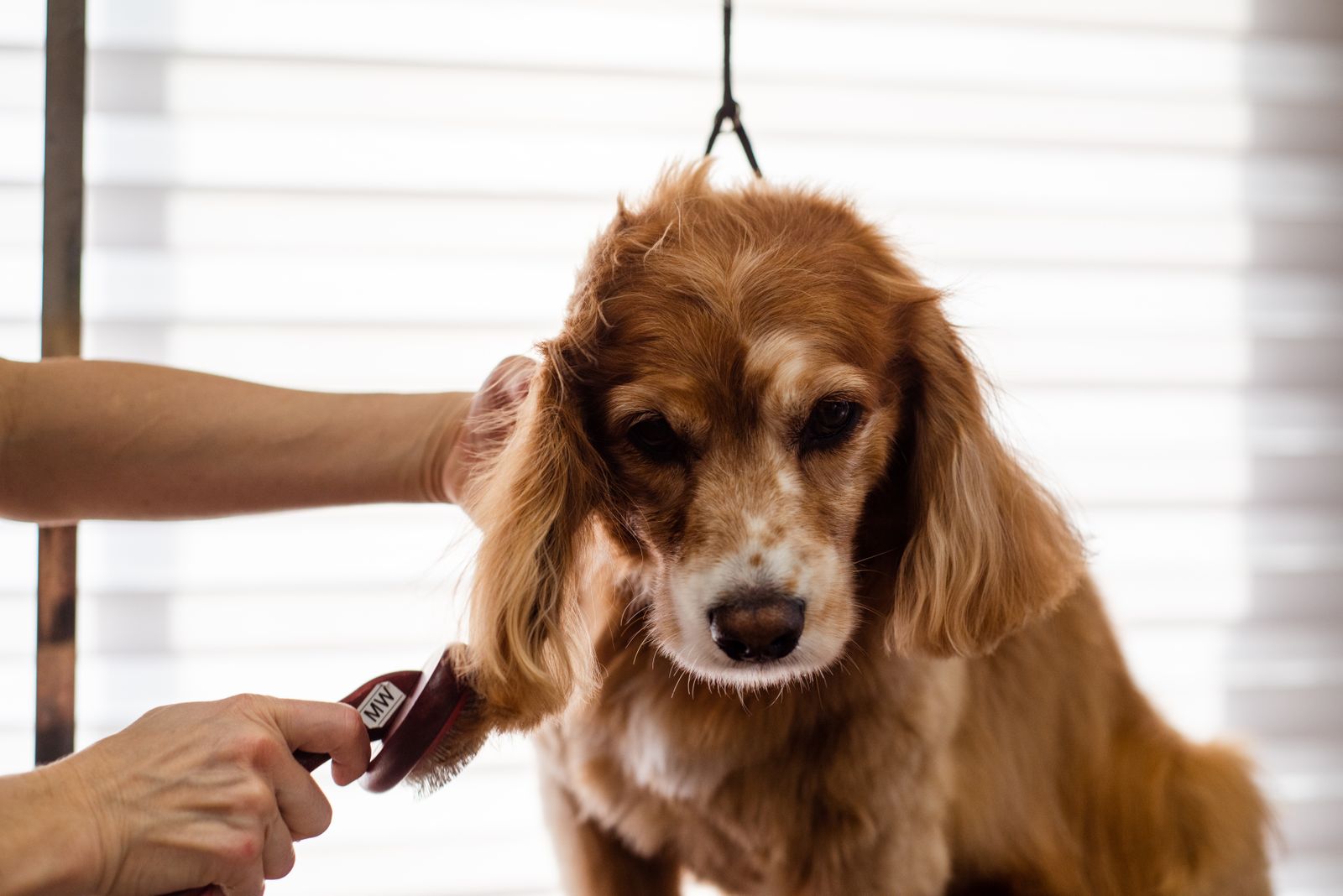
Hair in the canal: the fluffy-ear question
Poodles, doodles, and similar coats grow hair inside the ear opening. For years the standard advice was to pluck it all so the canal could breathe. Veterinary opinion has softened that rule: plucking healthy ears lightly to remove loose, debris-trapping hair is still common practice, but plucking an inflamed ear irritates it further, and some dogs with unplucked ears do perfectly well.
The home version of this is simple. Do not attempt deep plucking yourself. If your groomer reports heavy hair and wax buildup at appointments, mention it to your veterinarian, who can look down the canal with a scope and advise for your specific dog. The groomer-to-vet handoff on ears catches a lot of Clover dogs' problems while they are still small.
Stop cleaning and call the vet when
Certain signs move an ear out of the home-care category entirely: a strong odor, sweet and yeasty or plainly foul; discharge that is dark and grainy or yellow and thick; red, hot, swollen ear tissue; pain, yelping, or snapping when the ear is touched; constant head shaking or a new head tilt; scratching that has torn the skin. Cleaning over an infection wastes the days the medicine could have been working, and some cleaners are unsafe if the eardrum is compromised.
Expect your groomer to apply the same rule. If Soapy Paws or any groomer pauses a groom to flag an ear, they are protecting your dog, because bathing and handling an infected ear hurts and helps nothing. Get it treated, let it clear, and the regular routine can resume.
Common questions
Should I clean my dog's ears after every bath?
For floppy-eared and infection-prone dogs, yes, a drying ear cleaner after baths and swims is a good habit. Keep bath water out of the ears with cotton at the opening during the bath itself.
How can I tell a dirty ear from an infected one?
A dirty ear has some wax and little odor, and the dog is unbothered. An infected ear smells, looks red, produces heavy discharge, and the dog scratches, shakes, or guards it. When in doubt, the vet decides.
Can ear hair plucking prevent infections?
Not by itself. Light removal of loose canal hair helps some fluffy-eared dogs, but cleaning rhythm, drying after water, and prompt vet care for early signs matter more.
Photos in this guide are representative stock images.
← All guides from Soapy Paws← Back to Soapy Paws