Brushing a dog's teeth sounds simple until you are holding a brush and a dog who has other plans. First-timers in Clover usually fail for one of two reasons: they try to do the whole mouth on day one, or they give up after a week because the dog still fidgets, assuming it is not working. It is working, if you build it in stages. This walkthrough goes step by step from the first taste of toothpaste to a steady routine, and it explains what your groomer can add and what only a veterinarian can do.
Soapy Paws provides baths, haircuts, and nail trims, and the staff see teeth and gums at close range during face work. Owners ask about dental care at pickup all the time, so here is the full picture in one place.
The one idea to keep straight
Plaque is soft. Tartar is hard. Brushing removes plaque, the daily film that forms on teeth after eating, and that is genuinely valuable, because plaque is where dental disease starts. Once plaque mineralizes into tartar, the brown crust cemented along the gumline, no brush at home will remove it. Tartar comes off with scaling instruments, and thorough scaling, especially below the gumline where disease does its damage, is veterinary work done under anesthesia.
Everything else follows from that. Home brushing is maintenance. A groomer's brushing is maintenance plus a useful inspection. A veterinary dental is treatment. Owners who understand the difference spend their effort in the right place and are not sold a cosmetic scrape as a cure.
Learning to brush, step by step
- Step one: toothpaste tasting, nothing else. Squeeze a little dog toothpaste on your fingertip and let your dog lick it. Do this daily for a few days. Never use human toothpaste; dogs swallow what is in their mouths, and human formulas are not made for that.
- Step two: finger along the teeth. With toothpaste on your finger, run it along the outer side of the front teeth and canines for a few seconds. End while it is still easy, and praise the dog like he won something.
- Step three: introduce the brush. Move to a finger brush or soft dog toothbrush. Brush the outer surfaces of one side of the mouth in small circles, keeping sessions under half a minute at first.
- Step four: get to the back teeth. The big upper cheek teeth gather the most tartar and matter most. Lift the lip from the side rather than forcing the mouth open, and work in short passes.
- Step five: both sides, about a minute. Once the dog accepts work on both sides, a full session takes roughly a minute. You are brushing the outside surfaces only; the tongue handles much of the inside.
- Step six: lock in the schedule. Plaque hardens within a few days, so daily brushing is ideal and every-other-day is still worthwhile. Anchor it to an existing routine, like the evening feed, so it actually happens.
- Step seven: inspect weekly. Lift the lip and look. Pink gums and mild breath are the goal. A red rim at the gumline, heavy crust, a loose tooth, or chewing on one side means it is time for a veterinary opinion.
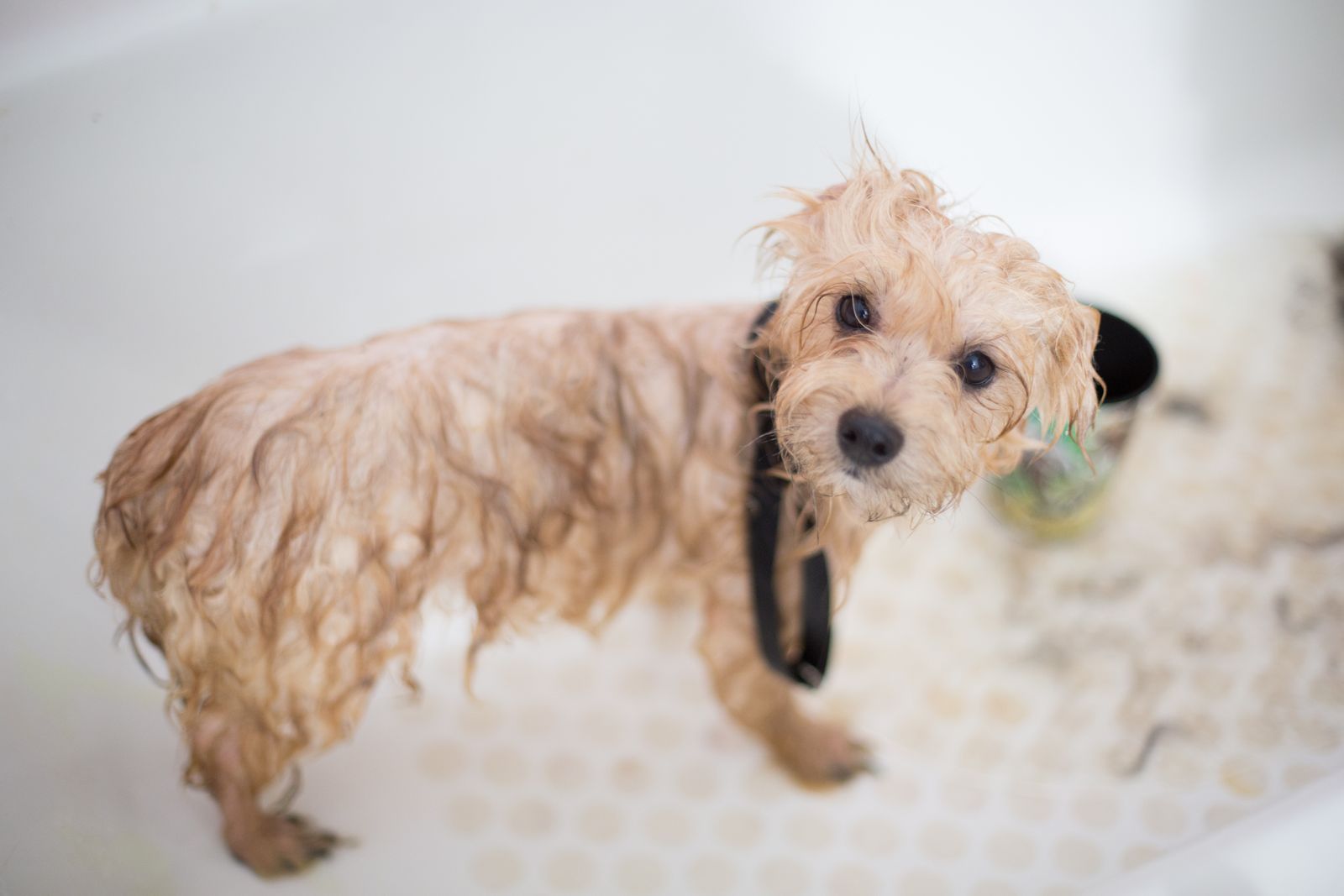
What the groomer can and cannot do
A groomer can brush your dog's teeth as part of a bath or groom, wipe away plaque and food debris, and give the mouth a close look under good light. That look has real value. Groomers flag tartar buildup, broken teeth, inflamed gums, and mouth odor to owners every week, often catching problems at the stage where a vet visit is simple rather than urgent.
A groomer cannot scale tartar, probe under the gumline, take dental X-rays, or extract teeth, and should not offer to. Be cautious with anesthesia-free dental services that promise deep cleaning: without anesthesia, only the visible crown can be scraped, which whitens the tooth while disease continues below the gumline, hidden and untreated. It looks like progress and is not.
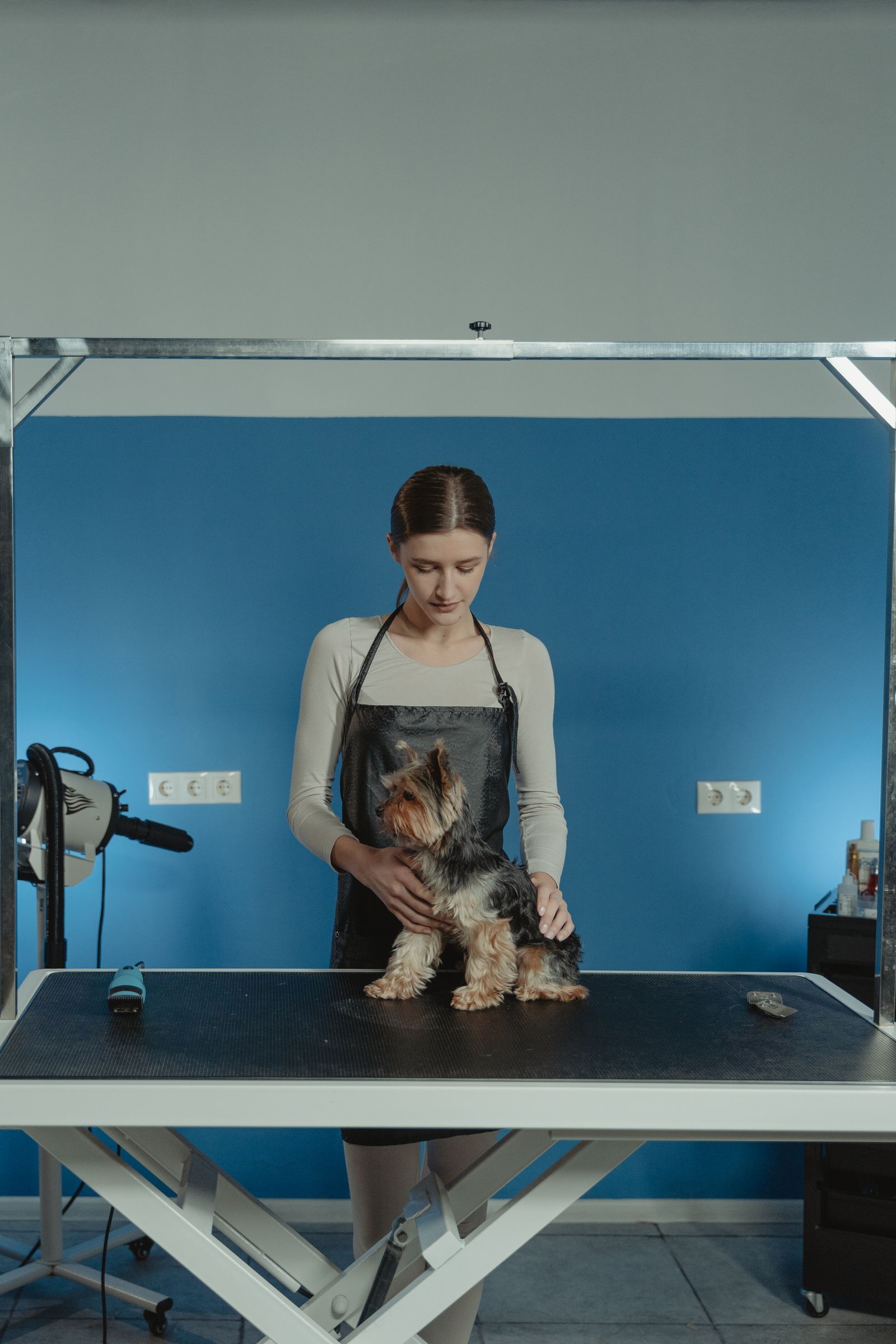
Small dogs, extra credit
Clover's groomers see a lot of Yorkies and other small breeds, and small mouths crowd teeth together, trap plaque between them, and develop tartar earlier than large breeds do. Small-dog owners should start the brushing habit young, check retained baby teeth as adult teeth come in, and expect that veterinary dentals may be part of normal care earlier in life. The home routine still matters just as much; it stretches the healthy interval between professional cleanings.
For puppies, begin mouth handling during the first months, touching teeth and gums briefly during play and cuddles. A puppy who grows up with fingers and brushes in his mouth becomes the adult dog who stands calmly for a minute of brushing and for the groomer's inspection too. It is one of the cheapest investments in a dog's long-term health an owner can make, in money and in minutes alike.
Chews and extras, in their place
Chews approved by the Veterinary Oral Health Council have evidence behind them and make a reasonable supplement, particularly for dogs still learning to accept a brush. Dental diets and water additives help modestly. Skip very hard chews such as antlers and weight-bearing bones if your vet advises against them, since cracked teeth are a common and painful outcome. None of these products remove tartar, and none replace brushing. They support the habit; they are not the habit.
Common questions
How long should each brushing session take?
About a minute for the full mouth once your dog is used to it. Work up to that over one to two weeks of shorter sessions rather than forcing a long session on the first day.
My dog already has brown tartar. Should I brush anyway?
Yes. Brushing will not remove the existing tartar, which needs a veterinary cleaning, but it slows new plaque and protects the teeth that are still clean. Book the vet check and keep brushing.
Can a groomer clean teeth well enough to skip the vet?
No. Groomer brushing is surface maintenance and a helpful inspection. Scaling below the gumline, where periodontal disease lives, requires veterinary equipment and anesthesia.
Photos in this guide are representative stock images.
← All guides from Soapy Paws← Back to Soapy Paws